


Savings Account Terms And Definitions: Exhaustive List

Savings Account Terms And Definitions: Exhaustive List
Introduction to Savings Account
A Savings Account is a deposit account held at a financial institution that provides principal security and a modest interest rate. It's an essential part of personal finance, offering a safe place to store funds while earning a return.
If you are a Financial Advisor looking for a platform to sell savings account then checkout the GroMo App now. You can earn upto rs. 1 Lakh by selling savings account through GroMo.
What is a Savings Account?
A Savings Account is one of the simplest types of bank accounts. It is intended to provide an incentive for individuals to save money.
Principal Security: Your deposits are safe, as commercial banks are insured by agencies like the Federal Deposit Insurance Corporation (FDIC) in the US or the Deposit Insurance and Credit Guarantee Corporation (DICGC) in India.
Interest Earnings: The bank pays interest on the money you keep in your savings account.
Liquidity: Savings accounts are very liquid, and you can withdraw funds when required. However, there might be a limit on the number of transactions you can make each month.
Key Terms Related to Savings Account
1. Interest Rate
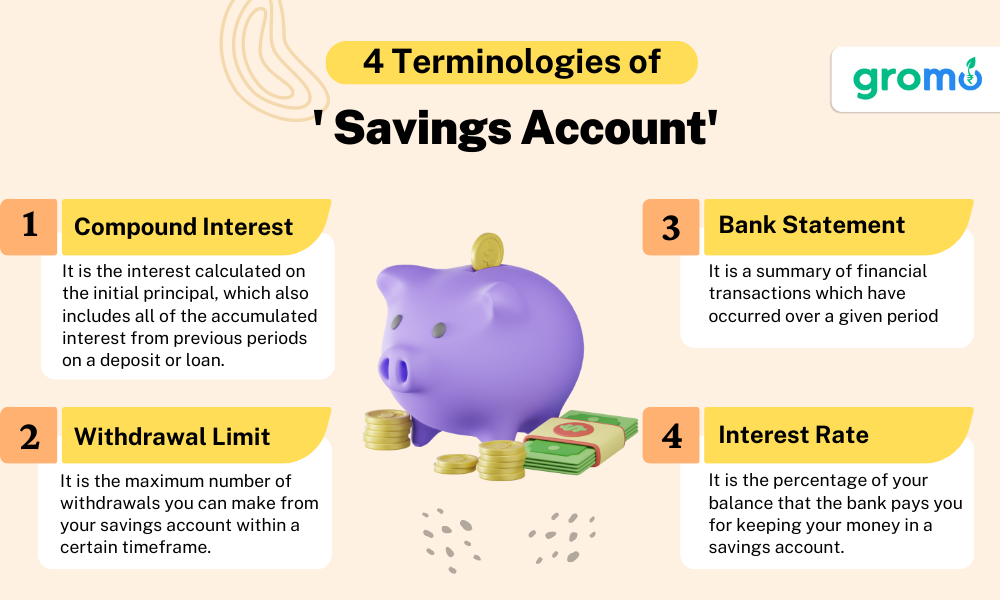
The interest rate is the percentage of your balance that the bank pays you for keeping your money in a savings account. The rate is typically compounded and paid monthly.
2. Compound Interest
Compound Interest is the interest calculated on the initial principal, which also includes all of the accumulated interest from previous periods on a deposit or loan.
3. Minimum Balance Requirement
Many savings accounts require a minimum balance, which is the lowest amount you can keep in your account to avoid fees.
4. Withdrawal Limit
The withdrawal limit is the maximum number of withdrawals you can make from your savings account within a certain timeframe.
5. Bank Statement
A bank statement is a summary of financial transactions which have occurred over a given period on a bank account held by a person or business with a financial institution.
The Purpose of a Savings Account
Savings accounts are designed to hold money that isn't spent on daily or monthly expenses. The purpose of such an account is twofold:
Safekeeping: The money in a savings account is kept safe by the institution where the account is held.
Income generation: A savings account generates interest income for the account holder.
Types of Savings Accounts
Several types of savings accounts cater to different needs:
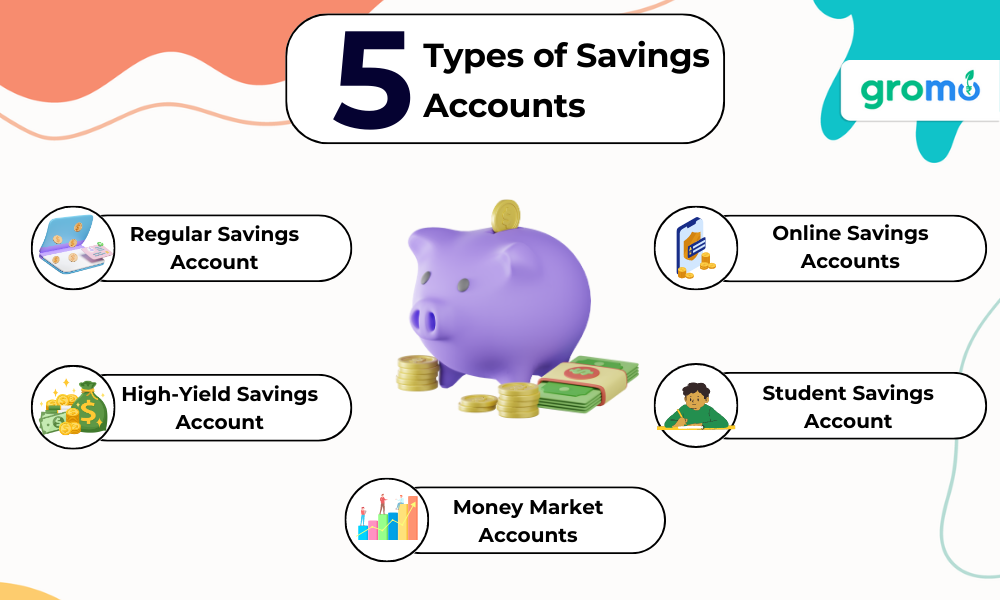
Regular Savings Account: This is the most common type of savings account, with standard interest rates and minimum balance requirements.
High-Yield Savings Account: These accounts offer higher interest rates than regular savings accounts.
Money Market Accounts: Money market accounts often have higher minimum balance requirements but provide higher returns and limited check-writing ability.
Online Savings Accounts: These accounts are typically managed entirely online, often offering higher interest rates due to lower overhead costs.
Student Savings Account: Some banks offer savings accounts specifically designed for students with competitive interest rates and low or no minimum balance requirements.
CHECK OUT!!
- Job Loss Insurance Meaning: Financial Planning Tips
- Difference Between Insurance and Investment: Explained
- Health Insurance Meaning: An Essential Financial Safety Net
A savings account is a cornerstone of smart personal finance management. It offers safety, liquidity, and a return on your funds, making it a great tool for managing unexpected expenses, emergency funds, or saving for future goals.
Having a good understanding of the related terms can help you select the right savings account for your needs and make the most of it. Remember, the key is not just to save, but also to grow your funds, so choose wisely!
Savings Account: More Terms and Insights
6. APY (Annual Percentage Yield)
Annual Percentage Yield (APY) represents the real rate of return earned in a year when taking into consideration the effect of compounding interest. Banks use APY to communicate the annual interest return of an account to their customers.
7. Overdraft Protection
Overdraft protection is a service offered by banks to cover insufficient funds in your account. If you make a purchase that exceeds your account balance, the bank can transfer money from a linked account, credit card, or line of credit.
8. Passbook
A passbook is a book provided by the bank to the account holder that records the holder's cash and check transactions. While largely replaced by electronic records in most places, some people and institutions still use passbooks.
9. Nomination
Nomination in banking terms means the right conferred on the bank account holder to appoint one or more persons who will be entitled to claim the balance in the account after the death of the account holder.
The Mechanics of Savings Accounts
How Does Interest Work on a Savings Account?
The bank pays interest on the money you keep in your savings account. Interest is usually compounded daily, monthly, or quarterly and paid out monthly, quarterly, semi-annually, or annually, depending on the bank's policy and the type of savings account. A key concept here is compound interest, where you earn interest on both the money you've deposited and any interest you've already earned.
How Are Savings Accounts Taxed?
In many jurisdictions, the interest you earn on a savings account is considered taxable income. The bank usually reports your annual earnings to both you and the Internal Revenue Service (or your country's tax authority) on a 1099-INT form (in the US). It's important to consider these implications and potentially discuss with a financial advisor.
The Role of Savings Accounts in Your Financial Plan
A savings account can play a crucial role in your overall financial plan. It serves as an excellent vehicle for emergency funds (recommended to cover 3-6 months of expenses) and saving for short-term goals, due to its safety and liquidity. However, for long-term goals, consider other investment options like stocks, bonds, or mutual funds, which could potentially offer higher returns.
Finding the Best Savings Account
While many banks offer savings accounts, not all are created equal. When looking for the best savings account for your needs, consider factors like:
Interest Rates: Higher interest rates mean more earnings.
Minimum Balance Requirements: Can you comfortably maintain the minimum balance without facing a penalty?
Fees: Be aware of any monthly maintenance fees, withdrawal fees, or other charges.
Access to Funds: How quickly and easily can you access your money when you need it?
Online and Mobile Banking Features: If you prefer banking digitally, ensure the bank offers robust online and mobile banking features.
By understanding all related terms and being aware of various factors, you can make an informed decision about opening and maintaining a savings account. It’s more than just a safe place to keep your money—it’s a crucial tool in your personal finance arsenal.
If you are a financial advisor seeking a platform to facilitate the sale of savings accounts, then you should check the GroMo App. You can make up to Rs. 1 Lakhs by selling savings accounts through GroMo.
Savings Account: More Concepts Explained
10. ATM Card
An ATM card is a card issued by a financial institution that allows you to access your savings account from an Automated Teller Machine. It enables you to withdraw cash, check your account balance, and sometimes deposit checks or cash.
11. Online Savings Account
An online savings account is a savings account managed and funded primarily on the Internet. They operate similarly to traditional accounts but often offer higher interest rates because they tend to have lower operating costs.
12. Joint Account
A joint account is a shared bank account between two or more individuals. Any individual who is a member of the joint account can withdraw from or deposit into the account. Joint accounts are often opened by close relatives (such as a married couple) or business partners.
13. Minor Account
A minor account is a savings account opened by a person, such as a parent or legal guardian, for a minor. The adult controls the account until the minor reaches the age of majority.
14. Senior Citizen Savings Account
A Senior Citizen Savings Account is designed for individuals above a certain age, providing them with a host of benefits including higher interest rates, priority service, and more. The eligibility age differs from one bank to another.
15. Automatic Savings Plan
An automatic savings plan is a type of personal savings system in which the account holder sets up a regular, automatic transfer of funds from their transaction account to their savings account. It's a simple and effective way to build a nest egg over time.
Understanding these concepts related to savings accounts can help you choose the right savings account that fits your financial goals and maximize the benefits of your savings efforts.
CHECK OUT!
- Motor Insurance Meaning: Related Terms
- Buy Now Pay Later Meaning: Guide To All Reated Terms
- Vehicle Loan Meaning:Guide To Understand Vehicle Loans
- Personal Loan Meaning: Understanding and Utilizing Personal Loans
16. Minimum Balance Requirement
Minimum balance requirement is the minimum amount of money required to be maintained in an account. The bank can impose penalties if the account balance falls below the stipulated minimum amount.
17. Overdraft Protection
Overdraft protection is a service that banks offer to checking account holders. Banks may cover payments when there's not enough money in the checking account, savings account, or credit line. The payments include personal checks or electronic payments for bills.
18. Direct Deposit
Direct deposit is an electronic transfer of payment directly from the payer’s account to the recipient's account. Many employers and government entities use direct deposit to pay employees or distribute benefits because it's often faster and cheaper than writing and sending checks.
19. Passbook
A passbook is a small booklet provided by the bank to record a customer's deposits and withdrawals from a savings account. In the digital age, passbooks have largely been replaced by electronic record-keeping, although they're still used in some places.
20. Mobile Banking
Mobile banking is the act of making financial transactions on a mobile device (cell phone, tablet, etc.). It can be used for personal banking transactions, including checking account balances, transferring funds, or making deposits to a savings account.
21. Interest on Savings Account
Interest on savings accounts is usually compounded daily, monthly, quarterly, or annually, and it's added to your account balance. The rate at which the interest is calculated and compounded can significantly affect the total return on your savings.
22. Statement Savings Account
A statement savings account is a type of savings account where the account activity is recorded on a periodic statement sent by the bank, rather than a passbook.
23. Tiered Interest Rate
Tiered interest rates are the interest rates on a debt or security that increases as the face value of the investment increases. In the context of savings accounts, tiered interest rates mean that the interest rate paid by the bank increases as the balance in the account increases.
Understanding these additional concepts about savings accounts can help individuals make better financial decisions and choose the savings account that best fits their needs. Whether you're saving for a short-term goal or building a nest egg for the future, the right savings account can be a safe and reliable place to store your money.
24. Nominee
A nominee is an individual designated by the account holder, who can claim the amount in the account in the event of the account holder's death.
25. Joint Account
A joint account is a bank account held in the name of two or more individuals. Any individual named in the account can make transactions, and every individual is equally liable for any charges or overdrawn balances.
26. Automated Teller Machine (ATM)
An automated teller machine (ATM) is an electronic banking device that allows customers to perform financial transactions, such as deposits, withdrawals, fund transfers, and account information inquiries, without the need for direct interaction with bank staff.
27. ATM Card
An ATM card is a card issued by a bank, credit union or building society that enables the customers to access their accounts via ATMs and make transactions such as deposits, cash withdrawals, and balance enquiries.
28. Bank Reconciliation
Bank reconciliation is the process of matching the balances in an entity's accounting records for a cash account to the corresponding information on a bank statement.
29. Know Your Customer (KYC)
Know Your Customer (KYC) is a standard banking policy adopted globally that ensures investment advisors know detailed information about their clients' risk tolerance, investment knowledge, and financial position. KYC protects both clients and investment advisors.
30. Customer Identification Program (CIP)
The Customer Identification Program (CIP) is a requirement where financial institutions need to verify the identity of individuals wishing to conduct financial transactions with them and is a provision of the USA Patriot Act.
Understanding all these terms related to a savings account can be quite advantageous. Not only will you be more aware of your rights and obligations, but you'll also be able to make the most out of your savings account. Knowledge, after all, is the first step towards effective money management.
*Looking for an app for earning online? GroMo is your answer! Now earn with each sale by selling various kinds of financial products
KEY TAKEAWAYS
-
Understanding the Basics: Savings accounts serve as a fundamental financial tool that promotes a habit of saving amongst individuals. They provide interest on the deposited amount, creating a reliable source of passive income.
-
Varying Interest Rates: Different banks offer varying interest rates on savings accounts. A comprehensive understanding of these rates is key to choosing the right account for your financial needs.
-
Significance of Terms: Terms like minimum balance, nominee, ATM card, and KYC play a crucial role in managing a savings account effectively. Understanding these terms can help individuals to utilize their savings accounts to their full potential.
-
Access to Services: With facilities like ATM withdrawals and online banking, savings accounts offer quick and easy access to funds while keeping them secure. It's important to understand the terms related to these services.
-
Importance of Compliance: Terms like KYC and CIP underline the importance of regulatory compliance in banking. Complying with these processes is essential to prevent fraudulent activities and ensure the security of the customer's fund
share


Tags :-
Related Blogs
See more blogs

Products
Credit Card
Savings Account
Demat Account
Loan
Line of Credit
Investment
Contact Us
© 2026 GroMo. All rights reserved.
More About GroMo
About GroMo
Do you want to earn money online without investment? Download GroMo to earn extra income from home today!
What is GroMo ?
GroMo is the best money-earning app that will help you in starting a business without any investment. Become a GroMo partner by downloading the GroMo app from Play Store and sell financial products from different brands to customers and earn over ₹1,00,000 every month.
You can attend free training, learn how to sell financial products to customers and start earning.
Who can become a GroMo Partner ?
You can be a working professional, a businessman, a student or a housewife - our app is a one-stop solution for anybody looking to learn and earn money by selling financial products. Other than your primary source of income, you can easily earn extra money from home by joining GroMo.
GroMo is one of the best side income sources where you can engage customers by sharing content with them and getting the financial product activated.
What are the benefits of working with GroMo?
1 Zero Investment business : Start your own business with 0 investment
2 Work from homes : Get one of the best at-home job opportunities
3 Quick payout : Shortest payout cycle in the market
4 Side income source : One of the best extra income sources
5 Great customer service : Grow your business with help from our customer support team
What financial brands can you sell ?
You can start your online business at investment with us today. Sell financial products from next-gen brands like Axis bank, Kotak 811 bank, Upstox, Paytm Money, Freecharge, Bajaj Finserv, etc. and earn extra income online without investment.
You can sell financial products from the following brand categories:
- Savings accounts
- Credit cards
- Demat accounts
- Credit accounts
- Loan
- Investments
...and many other fantastic financial products with our at-home money earning business. Like what we do? Great, there's more!
What are the features of GroMo ?
GroMo is a great platform to sell financial products. Trust us, you won't find a better way to earn extra online without investment. Your customers will be happy to get access to multiple financial products with you and you will be happy to earn more income from home, all in one app.
You can even build a team through referrals and boost your earning with our app to make money. Here's is a list of GroMo features you would love:
1 Get educated : Upskill with our free online courses and webinars and become a certified financial advisor while still doing home based work.
2 Manage customers : Manage your customers and track their status in your GroMo App. Moreover, you can set up reminders to follow up with your customers.
3 Engage your customers : Keep your audience engaged with personalized content, website and visiting cards to sell financial products.
4 Refer and earn : Take full advantage of our fantastic referral policy and refer people in your network to GroMo on a regular basis.
5 Track your earnings : Use your in-app wallet to keep track of your earnings and transfer money to your bank account.
6 Data security : Securely maintain customer data in your financial app without worrying about any data safety issues.
Get ready to earn money without investment with GroMo. Download our financial app todayGoogle Play Storestart your job from home.